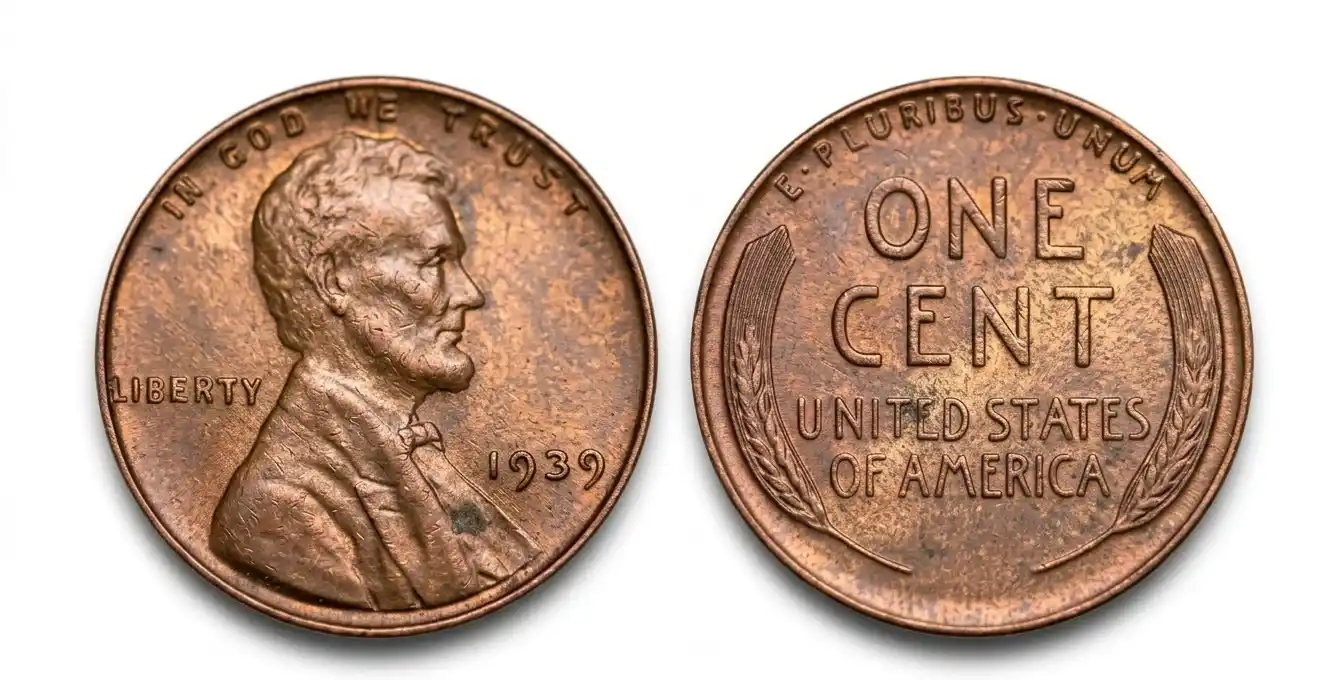
A subtle mint mark, unusual luster, or sharp wheat lines can completely change the value of a 1939 penny.
Professional numismatists view the copper 1939 cent as a stable asset within the modern coin market.
Common specimens found in pocket change rarely command high premiums.
The 1939 penny value increases significantly upon discovering coins featuring original mint brilliance or structural mistakes.
Facility | Mark | Mintage |
Philadelphia | None | 316,466,000 |
Denver | D | 15,160,000 |
San Francisco | S | 52,140,000 |
Philadelphia (Proof) | None | 13,520 |
Output from the Denver facility represents the lowest volume for this specific date.
Low mintage automatically makes Denver coins more desirable among high-end buyers.
San Francisco branch produced a moderate amount, ensuring a steady supply for most sets.
Philadelphia coins appear most frequently, excluding rare mirror-like specimens.
Core Elements Driving High Worth
Market worth forms under the influence of several independent variables.
Scarcity of a specific condition grade dominates over total mintage numbers.
Surface Color Classification
Copper coins fall into three primary color categories based on oxidation.
Brown BN
Red Brown RB
Red RD
Specimens belonging to the Red RD category possess the highest potential for growth.
RD designation applies to coins retaining over 95 percent of the original red copper glow.
Brown BN status indicates full surface oxidation typical for coins used in daily trade.
Value gaps between brown and red versions of the same grade often reach hundreds of dollars.
Detail Sharpness
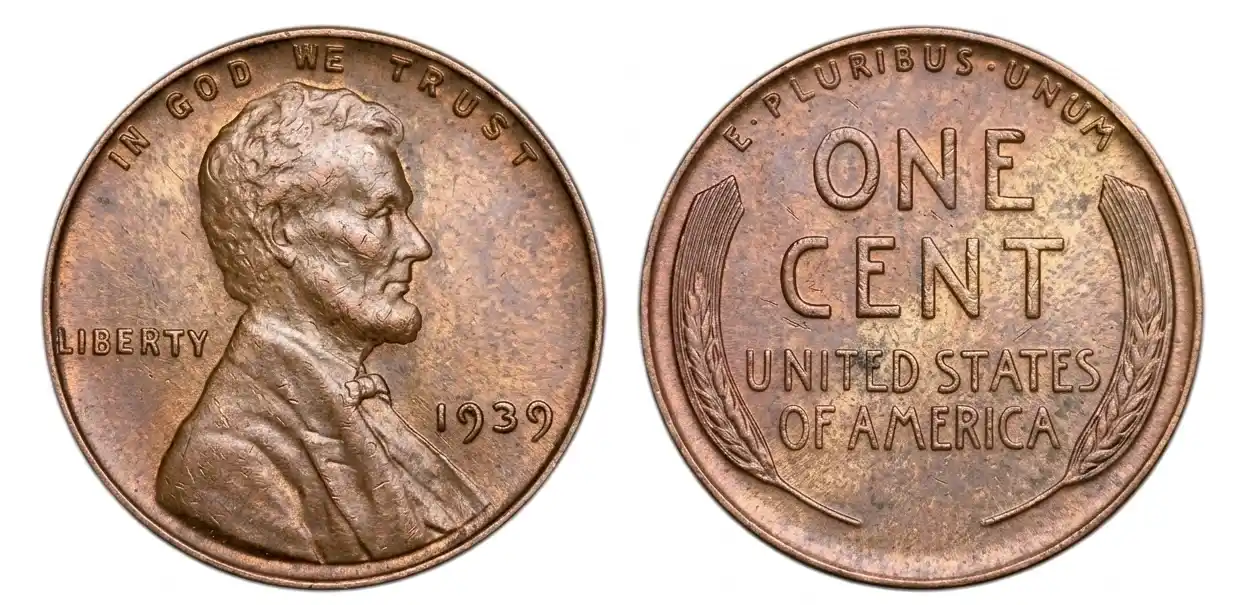
Clarity of the wheat lines on the reverse side serves as a vital indicator of usage.
Full definition of grains and stalks characterizes the highest preservation levels.
Worn areas on Lincoln’s hair or suit jacket suggest prolonged circulation.
Original shine must appear uniform across the entire metal disk.
Historic Auction Benchmarks
Sales records from major platforms demonstrate impressive financial results.
Maximum sums are paid for pieces sitting at the top of the Sheldon scale.
Grade | Mint Mark | Record Value | Sale Date |
MS68 RD | Denver | $6,900 | 2019 |
PR67+ RD | Philadelphia | $5,400 | 2021 |
MS67+ RD | San Francisco | $3,120 | 2020 |
MS67 RD | Philadelphia | $1,050 | 2022 |
Extreme rarity of such preservation for Denver strikes explains the $6,900 value of the 1939-D MS68 RD specimen.
Only a few coins received such high marks from professional experts.
Such lots appear in open auctions very rarely, triggering intense competition.
Market Value Dynamics
Analysis of market trends shows sustained interest in high-quality wheat cents.
Investment appeal depends on current supply and collector demand.
Annual value movement for MS67 RD grade:
2024 Value: $950
2025 Value: $1,020
2026 Value: $1,100
Average annual growth stays around 7.8 percent.
Dynamic looks different for lower grades like MS65.
2024 Value: $42
2025 Value: $45
2026 Value: $48
Growth remains steady despite smaller absolute profits.
Varieties and Striking Mistakes
Manufacturing flaws create unique pieces worth significantly more than standard ones.
Experts study the surface looking for specific anomalies.
Double Die Obverse DDO
Doubling of front elements occurs due to a defect on the working die.
Clear signs appear in the date digits and the word LIBERTY.
Distinct double outlines increase the coin's worth ten times or more.
DDO variants found on mirror-like Proof coins are especially prized.
Such mistakes occur rarely given the strict control during specialized production.
Re-punched Mint Mark RPM
Overlapping mint marks are found on specimens from Denver and San Francisco.
This error involves one letter punched over another with a slight shift.
Extra serifs or tails on the D or S letters confirm an RPM presence.
Worth of such finds depends on the visibility of the defect.
Minor shifts add between $10 and $30 to the base price.
Obvious and rare RPM types are valued in the hundreds of dollars.
Off-Center Strike
Image displacement happens when the metal blank is fed incorrectly into the press.
Part of the design remains blank, forming a crescent-shaped area.
Coins with over 50 percent displacement retaining the date enjoy high demand.
Small deviations under 5 percent hardly affect the final transaction sum.
Clipped Planchet
A clipped blank features a characteristic curved cut on the edge of the disk.
This defect arises during the stage of punching blanks from the metal strip.
Authenticity is verified by the Blakesley effect, seen as a faded rim on the opposite side.
Worth for this type of flaw ranges from $20 to $150.
Technical Specifications of the 1939 Penny
Accurate knowledge of physical traits helps in filtering out fakes.
Using a single measurement system simplifies the verification process.
Metric | Detail |
Composition | Copper 95%, Tin, and Zinc 5% |
Mass | 3.11 grams |
Diameter | 19.05 millimeters |
Edge Type | Plain |
Designer | Victor David Brenner |
Coin weight is a critical indicator during authenticity checks.
Significant deviation from the 3.11 grams standard suggests a different metal blank or a counterfeit.
Allowable wear might reduce the mass by only a few hundredths.
Professional Certification Workflow
Sending a coin for inspection to NGC or a coin appraisal app is the standard for expensive items.
Certified coins sell faster and at higher prices.
Investors trust the expert conclusion protected by a sealed plastic holder.
Slab encapsulation prevents potential metal damage during handling.
Achieving a grade of MS67 or higher requires mandatory verification.
Personal estimation often proves subjective, leading to financial losses.
Certification costs are justified when the market worth exceeds $100.
Impact of History on Survival Rates
Economic recovery in the late thirties boosted the circulation of cash.
Most 1939 coins were used heavily in trade operations.
Finding a specimen lacking signs of circulation becomes harder every decade.
Copper metal, being reactive, easily interacts with the environment.
Moisture and harsh liquids cause the appearance of dark spots.
Coins kept in original bank rolls maintain the best appearance.
Such sets often serve as the source for top-grade discoveries.
Opening a roll and separating the coins requires maximum caution.
Identification Routine for Valuable Pieces
Initial inspection is performed using a free coin app.
Attention focuses on central points of friction and wear.
Checklist:
Verify Date 1939 → Find Mint Mark → Analyze Surface Color → Inspect Wheat Stalks
Upon finding an S or D mark, the area around the letter must be checked.
Any strange bumps might indicate an RPM error.
Absence of a mark signifies production in Philadelphia.
Original luster is critical for Philadelphia cents.
A dull surface lacking wear signs might suggest chemical cleaning.
Cleaning coins is strictly forbidden as it destroys collector value.
Removing the natural coating robs the metal of its protection.
Professionals instantly spot interference by looking for micro-scratches.
Comparative Value Against Neighboring Dates
Comparison with 1938 and 1940 issues helps locate the coin's position in the series.
1939 occupies a middle ground regarding scarcity.
Year | Total Mintage | Starting Value MS65 RD |
1938 | 191,872,000 | $45 |
1939 | 383,766,000 | $48 |
1940 | 781,128,000 | $25 |
Despite the large mintage, the 1939 cent is valued higher than the mass-produced 1940 issue.
Higher value relates to the growing popularity of year-by-year sets.
Buyers seek to fill album slots with only the highest quality samples.
Demand for MS65 RD remains stable over the last five years.
Investment Potential Overview
Buying a 1939 cent in high grade is considered a long-term move.
Risk of sharp devaluation is minimal due to the historical weight of the series.
Coins featuring striking mistakes show the fastest growth rates.
Limited supply of rare varieties ensures interest from specialized buyers.
Owning a coin in MS67 state or higher provides superiority over most existing collections.
Market transparency and auction archives simplify profit forecasting.
Careful selection of specimens without structural metal flaws is the key to success.
Which specific error or grade attracts your attention for future acquisition?